



Introduction: The Enduring Language of Clothing
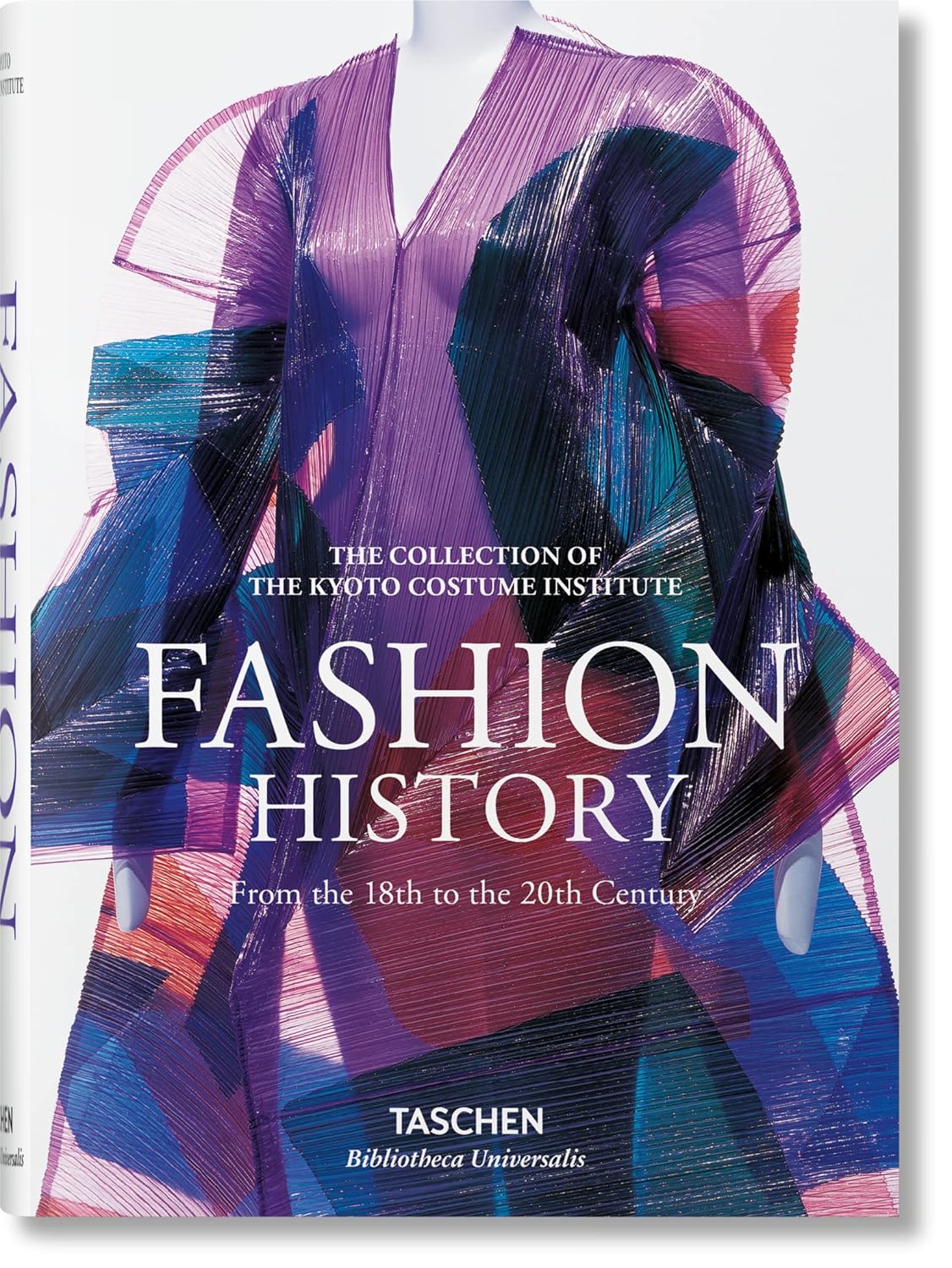
Clothing is far more than a practical necessity or a simple covering for the body. It is a profound and complex language, a non-verbal communicator that speaks volumes about an individual’s era, culture, social standing, profession, and personal identity. A Victorian mourning dress, a 1920s flapper gown, a 1960s mod suit—each garment is a capsule of its time, encapsulating the technological innovations, social norms, and artistic movements that shaped its creation. Recognizing this sartorial significance on a global scale is the Kyoto Costume Institute (KCI), one of the world’s most prestigious fashion research institutions. In collaboration with TASCHEN, the renowned art book publisher, the KCI has distilled its vast and unparalleled collection into a single, magnificent volume. This book is not merely a catalog of clothing; it is a sweeping, visually stunning journey through over two centuries of fashion history, offering readers an intimate, scholarly, and breathtakingly beautiful look at the art of dress from the 18th century to the end of the 20th.
The Kyoto Costume Institute: Guardians of Fashion History
To understand the authority and significance of this book, one must first appreciate the institution behind it. The Kyoto Costume Institute (KCI) was founded in 1978 with a mission to collect, preserve, and research Western and Japanese clothing from the 17th century to the present day . Over the decades, it has amassed one of the world’s most extensive and significant clothing collections, rivaling those of major fashion capitals like Paris, London, and New York. The KCI’s approach is uniquely comprehensive, examining fashion not in isolation, but through the intersecting lenses of sociology, history, and art . Their team of expert curators understands that a garment is an “essential manifestation of our very being,” a complex artifact that reflects the values, technologies, and aesthetics of its time . This deep, interdisciplinary expertise forms the scholarly backbone of this seminal publication.
A TASCHEN Masterpiece: The Bibliotheca Universalis Edition
TASCHEN is a name synonymous with high-quality, beautifully produced art books, and this volume is a perfect example of their craft. As part of the Bibliotheca Universalis series, it is designed to be an accessible, compact, yet comprehensive compendium of cultural history . The book itself is a physical pleasure to hold. Measuring a comfortable 7.68 x 5.51 inches, it is a portable hardcover that feels substantial without being unwieldy. Weighing in at 2.31 pounds and spanning 645 pages, it is a dense repository of knowledge and imagery . The paper quality is excellent, ensuring that the hundreds of photographs within are rendered with stunning clarity and color fidelity, a crucial feature for a book where visual detail is paramount.
A Curated Journey Through Three Centuries
The book’s title precisely defines its scope: a detailed exploration of Western fashion from the 18th to the 20th century . This was a period of immense and accelerating change in clothing, and the book charts this evolution with scholarly precision and visual flair.
The 18th Century: Rococo to Revolution
The journey begins in the 1700s, an era of opulence and intricate craftsmanship. The book showcases the grandeur of Rococo styles: the wide panniers, the richly embroidered silks, and the elaborate wigs and accessories of the French court . It then traces the shift towards neoclassicism in the late century, inspired by the democratic ideals of the American and French Revolutions and the renewed interest in the classical world, seen in the simpler, high-waisted muslin gowns of the Directoire period.
The 19th Century: Romanticism, Crinolines, and Bustles
The 19th century was a period of rapid stylistic turnover, and the book expertly documents each distinct phase. It begins with the Romantic era’s emphasis on a wasp waist, puffed sleeves, and sentimental details . It then moves through the Victorian age, illustrating the technological innovation of the cage crinoline that created vast, bell-shaped skirts, followed by the bustle era, which shifted volume to the back of the silhouette . The book also captures the rise of tailored garments for men and women, reflecting the changing social roles and the growth of leisure activities.
The 20th Century: Modernity and Liberation
The final section of the book covers the explosive changes of the 20th century. It begins with the sinuous, art nouveau-inspired silhouettes of the turn of the century and the revolutionary designs of Paul Poiret, who freed women from the corset. The 1920s are represented by the dropped waists and beaded fringe of the garçonne look. The book then showcases the sleek, modern elegance of 1930s bias-cut gowns, the utilitarian austerity of wartime fashion, and the triumphant return of haute couture with Christian Dior’s “New Look” in 1947 . It continues through the space-age designs of the 1960s, the eclectic individualism of the 1970s, the power dressing of the 1980s, and concludes with the minimalist and conceptual trends of the 1990s.
The Art of Presentation: Mannequins and Photography
A key element that distinguishes this book from other fashion histories is its unique photographic approach. The KCI does not simply photograph garments flat on a table or on live models. Instead, they have developed a method of displaying their collection on custom-made, headless mannequins . This technique is nothing short of brilliant. It allows each garment to be shown in its true, three-dimensional form, as it was meant to be worn, capturing its drape, structure, and volume with perfect fidelity. The mannequins are neutral, allowing the clothing to be the absolute star of every image. The photography is crisp, well-lit, and consistent throughout the book, enabling readers to appreciate the intricate details of stitching, fabric, and embellishment up close. This meticulous presentation transforms a study of fashion into a gallery-quality visual experience.
Scholarly Commentary and In-Depth Analysis
The visual journey is complemented by erudite and insightful commentary from the KCI’s team of curators and leading experts in fashion studies . The text is not merely descriptive; it provides a rich cultural and historical context for each garment and era. Readers learn about the technological innovations that made certain styles possible, the social movements that influenced silhouette and fabric choice, and the key designers who shaped the trends. The book delves into the nuances of underwear and its role in shaping the outer silhouette, and it pays close attention to accessories—shoes, hats, gloves, and bags—as integral components of a complete look . This scholarly depth ensures that the book is as valuable to students and academics as it is to casual fashion enthusiasts.
A Testament to Fashion as Art
Ultimately, this book is a powerful and persuasive argument for recognizing fashion as a complex and intricate art form . By treating each garment with the reverence and analytical rigor usually reserved for painting or sculpture, the KCI and TASCHEN elevate fashion history to its rightful place within the broader narrative of human creativity. The book demonstrates that clothing is not frivolous or superficial; it is a primary document of its time, a tangible expression of human ingenuity, and a deeply personal manifestation of identity . It is an “essential manifestation of our very being,” as the KCI’s curators assert .
Conclusion: An Essential Volume for Any Fashion Lover
“Fashion History: From the 18th to the 20th Century” is far more than a book; it is a comprehensive, beautifully realized museum within two covers. It represents the culmination of decades of preservation and research by one of the world’s foremost fashion institutions, presented with the unparalleled production quality of TASCHEN. The stunning photography of garments on custom mannequins brings over two centuries of style to life in vivid detail, while the expert commentary provides the essential context to understand their significance. Whether you are a student of fashion, a designer seeking inspiration, a historian, or simply someone who appreciates beauty and craftsmanship, this volume is an indispensable addition to your library. It is a celebration of the art of dress, a tribute to the power of clothing, and a timeless resource that will be cherished for generations to come.